
The Hidden Cost of Hand-Keying Orders: Why More Businesses Are Ditching Disconnected eCommerce
Table of Contents
- The Real Cost of Manual Order Entry
- Why Disconnected Systems Make It Worse
- ERP-First eCommerce: What It Means (and Why It Works)
- Real Results from Real Businesses
- ERP-First vs. Mainstream eCommerce + Connectors
- Future-Proofing Your Business with ERP-First eCommerce
- ERP-First eCommerce Product Suite
- B2B eCommerce
- B2C eCommerce
- Customer Portal
- Sales Portal
- WooCommerce Headless Engine
- Is your current setup holding you back?
Every business wants smooth operations, but for many manufacturers and distributors, the reality is far from seamless. Picture this: Your sales team receives an order via email, and an employee manually types it into your Sage X3, 300, Intacct or Microsoft Dynamics 365 Business Central ERP system. Later, someone realizes a digit was transposed in the product code, leading to the wrong item being shipped. Now, customer service has to handle the return, reprocess the order, and explain the mistake to an unhappy client. Meanwhile, another team member enters a large order, but because the inventory numbers weren’t updated in real time, the warehouse is short on stock—delaying fulfillment and damaging customer trust.
These scenarios aren’t just hypotheticals. They happen daily in businesses still relying on manual order entry. For companies using ERP systems like Sage or Microsoft Dynamics 365 Business Central, disconnected eCommerce solutions only amplify these frustrations, leading to wasted time, increased errors, and exhausted employees. This article looks into the hidden cost of manual order processing and explains why forward-thinking ERP-run businesses in all industries are replacing outdated systems with ERP-first eCommerce solutions. Learn how disconnected eCommerce systems cost your business time and money, and what ERP-first solutions can do to fix it
The Real Cost of Manual Order Entry
Hand-keying orders is more than just a mundane task; it’s a drain on resources and morale. Employees spend countless hours entering orders manually, diverting their attention from strategic initiatives that could drive business growth. Manual data entry is also highly susceptible to mistakes such as typos, incorrect pricing, and inaccurate inventory counts. These errors can lead to costly consequences, including refunds, rework, and customer dissatisfaction. Beyond the direct costs of errors, manual processing often necessitates additional staffing to handle the workload, inflating labor expenses. Additionally, repetitive, low-value tasks contribute to employee burnout and decreased job satisfaction, potentially leading to higher turnover rates.
Manual entry also delays order fulfillment. When sales teams or customer service representatives are bogged down in data entry, orders take longer to process, which slows down shipping and impacts customer expectations. Today’s customers demand speed and accuracy, and a business that cannot keep up risks losing repeat customers to competitors who offer a more seamless experience. Moreover, businesses that rely on manual entry struggle to scale efficiently. As order volumes increase, the demand for more personnel and additional resources rises, leading to higher operational costs that cut into profitability.
Why Disconnected Systems Make It Worse
Integrating multiple disparate systems, including eCommerce platforms, connectors, ERPs, and various bolt-ons, creates a complex web that’s challenging to manage. This “spaghetti mess” often leads to integration breakdowns, where issues arise, and it’s unclear which component is at fault, resulting in finger-pointing between vendors and prolonged downtime. Maintaining several systems requires continuous IT support, extensive training, and ongoing integration efforts, all of which accumulate hidden expenses. Furthermore, disconnected systems hinder data flow, leading to inconsistencies and delays that can affect decision-making and customer service. This is far from what you want when trying to create a seamless experience for both your customers and your team.
A lack of synchronization between systems often results in inventory mismatches, which can be catastrophic for businesses managing high order volumes. When inventory data doesn’t update in real-time, businesses risk overselling products they don’t have in stock, leading to canceled orders and disappointed customers. Conversely, inventory might appear unavailable when it is actually in stock, resulting in lost sales opportunities. These inefficiencies damage customer trust and impact brand reputation.
Another major challenge of disconnected systems is the lack of visibility. When data is fragmented across different platforms, decision-makers struggle to access accurate reports, making it difficult to track sales trends, forecast demand, and optimize pricing strategies. In contrast, an ERP-integrated eCommerce system provides real-time reporting capabilities that enable businesses to make informed decisions based on up-to-date, accurate data.
ERP-First eCommerce: What It Means (and Why It Works)
An ERP-first eCommerce solution is designed to integrate seamlessly with your existing ERP system, such as Sage X3, 300, Intacct or Microsoft Dynamics 365 Business Central. It’s designed with this in mind, meaning your ERP is not just an afterthought. With fewer moving parts, processes are more automated, reducing the need for manual intervention and minimizing errors. Real-time data ensures accurate orders, pricing, and inventory, leading to better decision-making and enhanced customer satisfaction. A single source of truth eliminates data silos, providing a cohesive view of business operations and improving overall efficiency.
One of the primary benefits of ERP-first eCommerce is that it eliminates duplicate data entry. Orders placed online flow directly into the ERP system, ensuring that customers receive correct pricing, real-time inventory updates, and fast order confirmations without any manual intervention. This level of automation not only improves operational efficiency but also reduces the likelihood of human error.
Additionally, ERP-first eCommerce platforms facilitate better customer experiences by allowing businesses to provide personalized service. With integrated data, companies can offer tailored pricing, product recommendations, and account-based ordering, all of which contribute to higher customer satisfaction and retention rates. Businesses can also extend self-service capabilities with a customer portal, enabling customers to track orders, view invoices, and manage their accounts without needing to contact customer support.
Real Results from Real Businesses
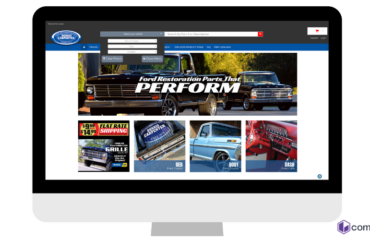
Companies that have adopted ERP-first eCommerce solutions report significant improvements. Dennis Carpenter, a manufacturer and distributor of restoration parts for classic vehicles, faced challenges with disconnected systems, that led to inaccurate pricing and inventory mismatches. After implementing an ERP-first eCommerce platform, they streamlined their order management process, ensuring accurate stock levels and pricing updates without manual intervention. They saw a huge uptake of sales and in the first couple of years, they were doubling their sales online. This transition not only enhanced customer satisfaction and drove more sales but also freed up valuable staff time for higher-value tasks, boosting overall productivity.
Another customer came to us looking for a way to eliminate the manual entry of credit card payments in Sage X3. With two CSRs spending 3 to 5 minutes per transaction, the process was not only time-consuming but also prone to error. Their goal was clear: automate the payment workflow and free up their team to focus on more valuable tasks. By implementing our solution, we helped them streamline this process entirely—reducing manual effort, increasing accuracy, and giving their team time back in their day. The result? A smoother operation, happier staff, and a more efficient use of resources.
ERP-First vs. Mainstream eCommerce + Connectors
To fully grasp the financial and operational benefits of ERP-first eCommerce, it’s essential to compare it against mainstream eCommerce platforms that rely on connectors. The table below highlights key differences and demonstrates why businesses that prioritize ERP integration see better results.
| Factor | ERP-First eCommerce | Mainstream eCommerce + Connectors |
| Order Processing Speed | Instant Sync | Potential delays from integration lags |
| Manual Data Entry Errors | Minimal | High risk of typos & mistakes |
| IT Maintenance Costs | Lower | Higher due to complex setup |
| Inventory Accuracy | Real-time updates | Prone to mismatches |
| Customer Experience | Personalized & seamless | Limited by disconnected systems |
| Scalability | Built-in for growth | Requires ongoing adjustments |
| Total Cost of Ownership | Predictable, lower long-term costs | High due to recurring fixes & updates |
Beyond the upfront investment, businesses must consider the total cost of ownership over time. ERP-first eCommerce minimizes IT maintenance, reduces support headaches, and ensures seamless scaling without additional development costs. By eliminating manual data entry, businesses save hours of labor each week, allowing teams to focus on higher-value initiatives rather than troubleshooting system issues or fixing order errors.
Future-Proofing Your Business with ERP-First eCommerce
The hidden costs of manual order entry and disconnected systems can significantly hinder business growth and efficiency. By transitioning to an ERP-first eCommerce solution, companies can streamline operations, reduce errors, and enhance both employee and customer satisfaction. When order processing is automated, teams can dedicate more time to meaningful tasks that drive revenue and improve customer relationships.
As digital transformation accelerates, businesses that continue relying on outdated, fragmented systems risk falling behind. An ERP-first approach future-proofs operations, ensuring that companies can scale seamlessly while maintaining high efficiency and accuracy.
ERP-First eCommerce Product Suite
To eliminate the inefficiencies of manual order entry, businesses need a well-integrated solution that reduces operational complexity, improves order accuracy, and eliminates the need for hand-keying orders – allowing businesses to scale with confidence.commercebuild offers a full suite of eCommerce products to help your business to grow and scale.
B2B eCommerce
Our purpose-built B2B eCommerce platform integrates directly with your ERP, ensuring real-time inventory updates, automated order processing, and personalized customer experiences. With features like bulk ordering, tiered pricing, and account-based catalogs, businesses can eliminate manual order entry while improving operational efficiency.
B2C eCommerce
For businesses selling directly to consumers, commercebuild’s integrated B2C eCommerce solution provides real-time pricing and inventory synchronization, ensuring accurate fulfillment and a seamless customer experience. Cloud-based, mobile-friendly platforms with fast load times and flexible deployment options help businesses adapt to changing market demands.
Customer Portal
A self-service customer portal reduces the need for manual invoicing and order tracking by providing 24/7 access to real-time account information. Customers can view order history, pay invoices, and track shipments without requiring direct assistance—freeing up valuable internal resources.
Sales Portal
Sales teams need an efficient way to manage orders without relying on spreadsheets or manual entry. An ERP-integrated sales portal enables reps to search products, place orders, and manage customer accounts with real-time data access, reducing errors and accelerating sales cycles.
WooCommerce Headless Engine
For businesses leveraging WooCommerce, a headless eCommerce engine with direct ERP integration ensures data consistency while offering a highly customizable front-end experience. This setup supports both B2B and B2C transactions while eliminating the risks associated with disconnected systems.
Is your current setup holding you back?
Book a call with our ERP-eCommerce experts and let us help you to evaluate your systems and consider whether an ERP-first approach could propel your business forward, transform your operations and drive growth.